Feeding Station Setup Tips for a Multi-Dog Household With a Chihuahua
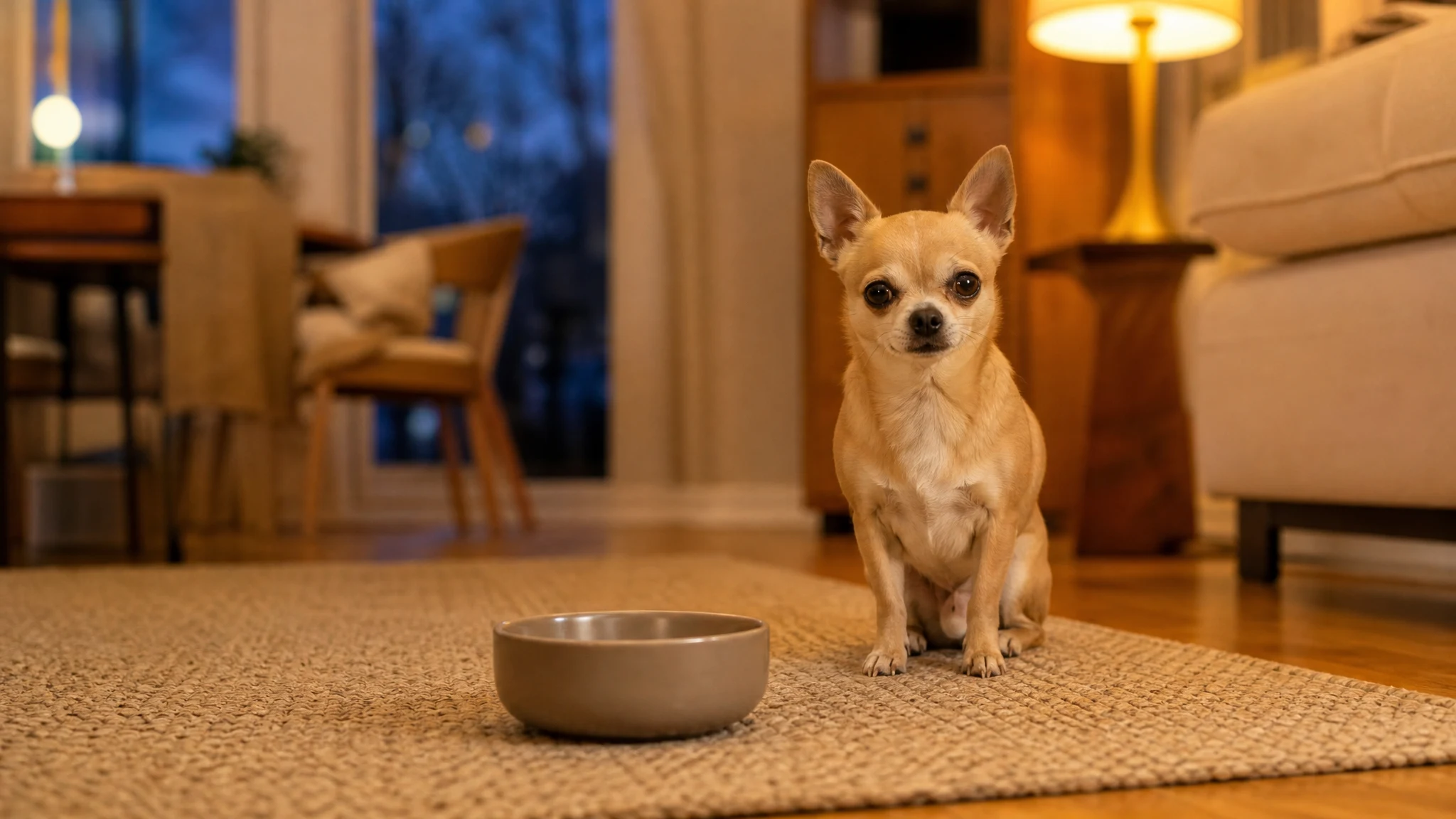
General nutrition information compiled from product labels and published sources, not veterinary advice. Your veterinarian is the right person to choose a diet for your dog, especially one with a health condition.
Feeding several dogs at once is mostly a logistics problem. Feeding a Chihuahua alongside bigger dogs adds a second problem. A dog this small can be crowded out of the bowl, or can end up eating a larger dog's food by accident.
A well-planned dog feeding station fixes most of this. This guide walks through the setup step by step. It also shows how to read food labels so each dog gets the right food in a sensible amount.
One note on method. The product details below come from label data published by each brand. We compared those labels. We did not run feeding trials or taste tests.
Why a Chihuahua Needs Its Own Feeding Plan
Hill's Pet Nutrition lists adult Chihuahuas at about 2 to 6 pounds and says they seldom exceed six pounds. That makes the breed a toy dog by size. Wikipedia notes that pet Chihuahuas often run heavier than the show standard. So your dog may not match those numbers, and a vet can tell you what a healthy weight looks like for your dog.
At that size, a few extra bites matter. Wikipedia also lists patellar luxation among the breed's orthopedic concerns and says weight control is relevant. Whether a food or a weight plan helps an individual dog is a question for a veterinarian.
Wikipedia also names hypoglycemia as a concern in toy-breed puppies. The practical point is that a Chihuahua puppy should not be left to compete for meals or miss them. Ask your veterinarian how often your puppy should eat.
Materials You Will Need
- One bowl per dog, each different enough to tell apart (color or shape)
- A washable mat under each bowl
- A measuring cup or a kitchen scale
- A baby gate, a pet pen or a closable door
- A lidded container for each food, labeled with the dog's name
- A shallow bowl or plate for the Chihuahua. A small dog with a tiny jaw tends to find a wide, shallow dish easier to eat from
- A notebook or phone note for portions and body weight
- A timer
Step-by-Step: Building the Station
Step 1: Pick the location and separate the dogs
Choose a quiet spot away from foot traffic, with a floor that wipes clean. A kitchen corner, laundry room or spare room all work.
The Chihuahua's spot should be physically separate from the others. Use a gate, a pen or a closed door. Distance alone is often not enough, because a bigger dog can cover a room in seconds.
Step 2: Give each dog a defined place
Set each bowl on its own mat and keep the same layout every day. Dogs settle into a routine more easily when the spot never changes.
Keep bowls at least a few feet apart if dogs eat in the same room. If any dog guards food, use separate rooms.
Step 3: Match the food to the dog
This is where multi-dog homes go wrong. A Chihuahua should not be eating a large dog's food by default, and the reverse is also a problem. Read the AAFCO statement on each bag. It tells you which life stage the food is formulated for.
Here is what the label statements say for a few foods:
- Royal Canin Chihuahua Adult Dry is formulated to meet AAFCO nutrient levels for maintenance. The brand describes it as a Chihuahua-specific formula for purebred Chihuahuas 8 months and older, with a small kibble sized for the breed's pointed muzzle and tiny jaw.
- Royal Canin Chihuahua Puppy Dry is formulated for growth. The brand says to move to the adult food after 8 months.
- Hill's Science Diet Adult Small & Mini Chicken & Brown Rice Recipe is backed by AAFCO feeding tests for adult maintenance.
- Hill's Science Diet Puppy Small & Mini Chicken & Brown Rice Recipe covers puppies up to one year. Hill's says it is not recommended for adult dogs.
- VICTOR Hi-Pro Plus Small Breed Adult is labeled for all life stages, except growth of large size dogs (70 lb or more as an adult).
The "except growth of large size dogs" wording does not cause a problem for a Chihuahua. As Whole Dog Journal explains, the phrase concerns dogs that will reach 70 pounds or more as adults.
Some foods are labeled for all life stages including growth of large size dogs. Nom Nom Chicken Cuisine and JustFoodForDogs Pantry Fresh Chicken & Rice carry that statement. Those can suit a mixed household on paper, but check portions carefully for the small dog.
If the dogs eat different foods, the label is also your safeguard against swaps. Keep each food in its own labeled container.
Step 4: Measure portions from the label, then adjust
Treat the feeding guide on each package as a starting point. Brands write their guides for the average dog, and your dog may need more or less.
A few published examples show how much the numbers vary by product:
- Royal Canin Chihuahua Adult Dry: a 2.2 lb dog with low activity gets 1/4 cup (24 g), and the brand lists 323 kcal per cup.
- VICTOR Hi-Pro Plus Small Breed Adult: 1/2 cup daily for a 5 lb dog and 1 cup for a 10 lb dog, at 360 kcal per cup.
- Freshpet Small Dog Bite Size Chicken Recipe: 1/2 to 1 cup per day for a 5 to 10 lb dog, at 267 kcal per cup.
- Nom Nom Chicken Cuisine: 1 cup (218 g) per day for a 10 lb dog on a fully Nom Nom diet, at 244 kcal per cup.
A cup is not a standard unit of energy. A cup of one food can carry well over a hundred more calories than a cup of another. That is why it is risky to scoop all the dogs' meals with one cup.
For a more detailed look at amounts, see our guide on how much to feed a Chihuahua by age and weight. Royal Canin and others also publish weight and activity tables on their own pages.
Weigh the food on a kitchen scale if you can. Scoops vary, and for a dog under six pounds a small error is a big share of the day's food.
Step 5: Set the schedule
Feed at the same times every day, with all dogs fed at once. Dogs that wait while others eat tend to hover and pressure the one eating.
The brands' guides split the daily amount into one or two meals. Freshpet, for example, says one or two meals. For a Chihuahua puppy, ask your vet how many meals are right, given the hypoglycemia concern noted above. Do not guess.
Step 6: Supervise, then pick up the bowls
Put the bowls down and stay in the room. Set a timer for about 15 to 20 minutes. When it ends, pick up whatever is left.
Leaving food out all day, often called free feeding, makes portion control close to impossible in a multi-dog home. A larger dog may finish the Chihuahua's leftovers without anyone noticing.
Step 7: Let the dogs out one at a time
After meals, release the dogs one by one, with the Chihuahua last or first depending on what keeps things calm. Check that nobody lingers at another dog's bowl.
Wash the bowls daily. Wipe the mats and the floor around them.
Step 8: Record and adjust
Write down what each dog ate and weigh the dogs regularly. Hill's tells owners to adjust portions to maintain an optimal weight, and its adult Small & Mini page says to check with a veterinarian if unsure.
If your Chihuahua is gaining or losing weight, change the amount in small steps and talk to your vet before making a big change.
Switching Foods Without Upsetting the Station
If you are changing a dog's food while setting this up, go gradually. Hill's recommends a 7 day transition. VICTOR suggests 7 to 10 days. Nom Nom suggests about 7 days.
Mix a little new food into the old and raise the share over the transition. Keep the other dogs' bowls on their own plan, so that a switch for one dog does not become a switch for all.
Tips for a Smooth Setup
- Use visual cues. A different bowl color for each dog makes mix-ups less likely, especially when several people feed the dogs.
- Feed the Chihuahua first, or behind a gate. This gives the smallest dog a head start and takes the pressure off.
- Reward calm behavior. If a dog hovers or whines, wait for a calm moment before putting the bowl down. Reward-based methods, in line with the American Veterinary Society of Animal Behavior, work better than punishment around food. Never use harsh corrections.
- Keep treats in the plan. Count them toward the day's food, since a few extra bites are a larger share of a toy dog's day.
- Plan for fresh food. Fresh foods such as Freshpet need the storage the brand describes. Check the brand's page for how to store and serve them.
- Ask about special needs. If a dog has a health condition, confirm both the food and the amount with your veterinarian. Prescription diets are something only a veterinarian prescribes.
Common Mistakes to Avoid
- Sharing one bowl or one scoop. It hides who ate what and makes portions unreliable.
- Trusting the bag as the final word. A label guide is a starting point. Your dog's body condition and your vet's advice decide the real amount.
- Feeding the Chihuahua a large dog's food by habit. Check the life stage on the AAFCO statement, and compare calories per cup.
- Letting food sit out. This invites stealing and overeating.
- Ignoring tension at the bowls. Growling, stiffening or stealing are signs to separate the dogs further.
- Switching food too fast. Follow the brand's transition guidance.
- Assuming a breed-specific food is automatically right. Royal Canin lists Chihuahua-specific recipes, but a breed label does not replace a vet's judgment about your dog.
What to Expect
With a consistent station, many households find that mealtimes become calmer and that it is easier to see how much each dog eats. Separate spaces may reduce food stealing and conflict, though results depend on the dogs involved.
Careful measuring may also make it easier to hold a steady weight. This is not a promise, and a dog's weight depends on many factors. A veterinarian is the right person to say what a healthy weight and diet are for your Chihuahua.
Give the new routine a couple of weeks. If a dog refuses meals, loses weight, or seems unwell, call your vet rather than changing the setup again.
A Note on Food Safety News
You may see news about diet and heart disease in dogs. The FDA's page on diets and canine dilated cardiomyopathy shows its latest update as December 23, 2022. The FDA says reports alone are not enough to establish causation. It does not plan further public updates without meaningful new scientific information. If you have questions about your dog's diet, ask your veterinarian.
Sources
- Hill's Pet Nutrition: Chihuahua breed page
- Royal Canin: Chihuahua Adult Dry Dog Food
- Royal Canin: Chihuahua Puppy Dry Dog Food
- Hill's Science Diet: Adult Small & Mini
- Hill's Science Diet: Puppy Small & Mini
- VICTOR: Hi-Pro Plus Small Breed Adult
- Freshpet: Small Dog Bite Size Chicken Recipe
- Nom Nom: Chicken Cuisine
- FDA Center for Veterinary Medicine: diets and canine dilated cardiomyopathy
- Whole Dog Journal: nutritional adequacy statements
- Wikipedia: Chihuahua (dog breed)