How to Decide What Dog Food Is Best for Your Chihuahua
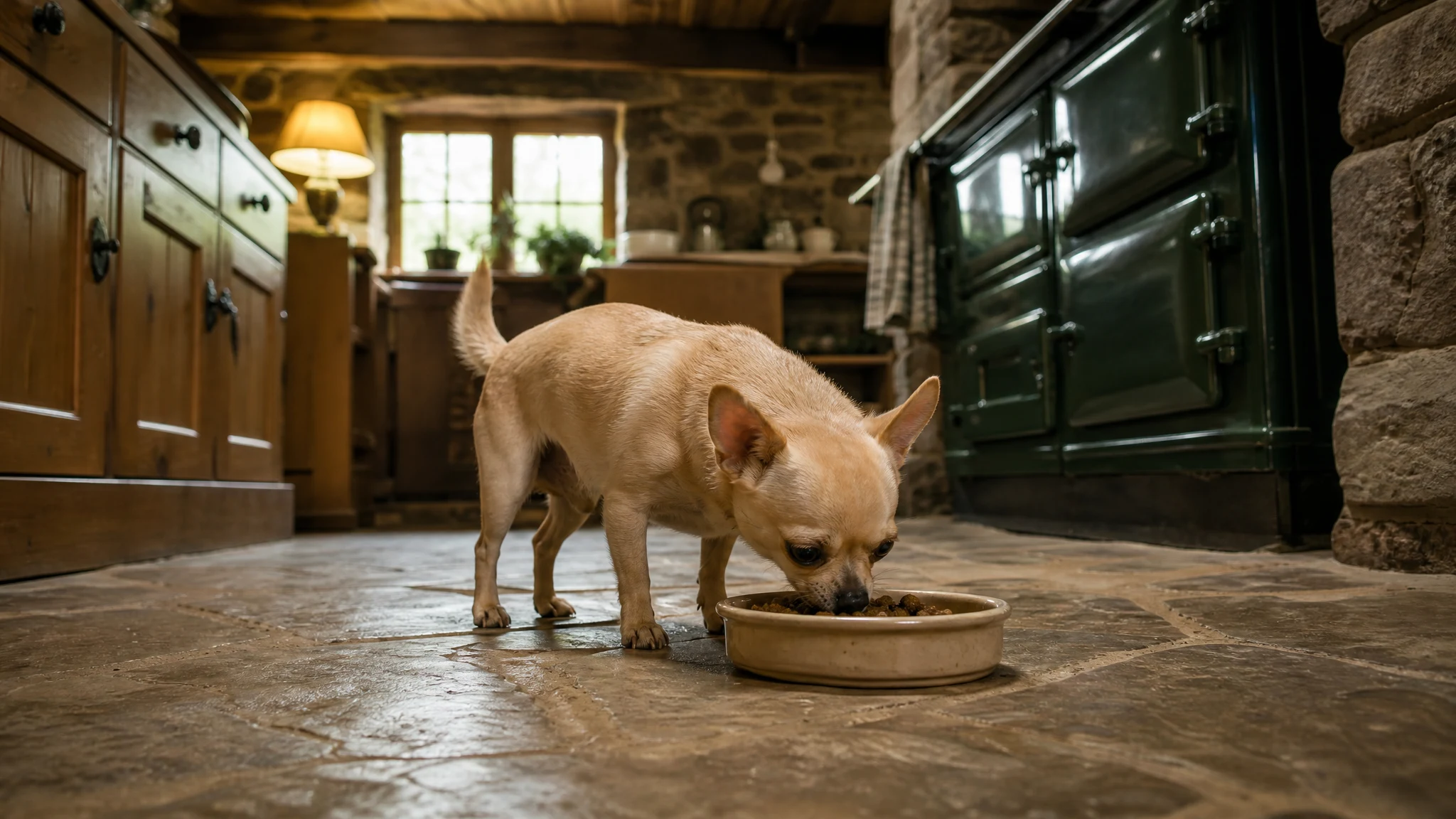
General nutrition information compiled from product labels and published sources, not veterinary advice. Your veterinarian is the right person to choose a diet for your dog, especially one with a health condition.
If you are asking what is the best dog food for a Chihuahua, the honest answer starts with the label, not the front of the bag. Marketing words like "premium" and "natural" have no set meaning. The back panel does.
This guide shows what to check, how to compare foods side by side, and which label details deserve a second look. We compared label data only. We did not run feeding trials or taste tests, and we are not saying any food is right for every dog.
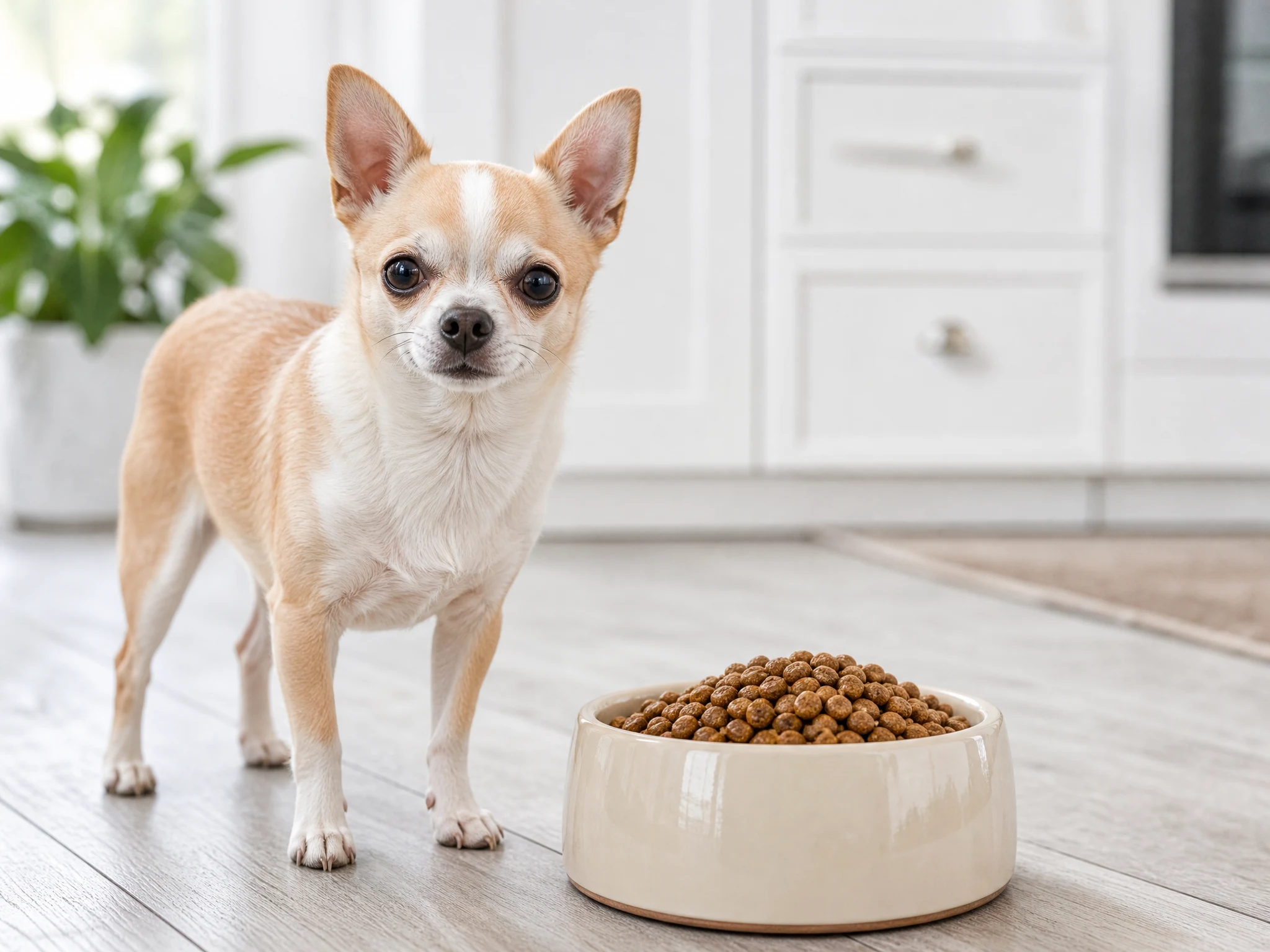
Start With What Makes a Chihuahua Different
Hill's Pet Nutrition lists the Chihuahua at 2 to 6 pounds and says the breed seldom exceeds six pounds. Wikipedia notes the show maximum is about 5.9 pounds and that pet Chihuahuas sometimes go past 9 pounds. So there is a real range, and the label's feeding guide for your dog's actual weight matters.
Three practical points follow from that size:
- Calories are small and easy to overshoot. A few extra kibbles are a bigger share of the day for a 5 pound dog.
- Kibble size matters. Royal Canin describes its Chihuahua formulas as made for a pointed muzzle and tiny jaw.
- Puppies are a separate case. Wikipedia mentions hypoglycemia as a concern in toy breed puppies. Feeding schedule and food choice for a puppy are questions for your veterinarian.
A Chihuahua is far below 70 pounds, so the large-size growth wording on a label is not a problem for this breed. More on that below.
What to Look For: Quality Indicators on the Label
1. The AAFCO nutritional adequacy statement
This is the single most useful sentence on the bag. It tells you the life stage the food is made for and how that was established. Look for wording like "formulated to meet the nutritional levels established by the AAFCO Dog Food Nutrient Profiles" or "animal feeding tests using AAFCO procedures substantiate." The second is a feeding-test claim made by the brand. We did not test anything ourselves.
Whole Dog Journal explains that growth and all life stages labels must say either "including growth of large-size dogs (70 pounds or more as an adult)" or "except for growth of large-size dogs." For a Chihuahua puppy, either version is acceptable on size grounds.
2. Life stage that matches your dog
Royal Canin's Chihuahua Puppy page says to move to its Chihuahua Adult food after 8 months. Hill's Science Diet Puppy Small & Mini is described for puppies up to 1 year. Check the stage on the label against your dog's age, and ask your veterinarian about the timing of the switch.
3. The first ingredients
Ingredients are listed by weight before cooking, so the first five tell you the most. Look for a recognizable protein early. Know that "chicken" includes water weight, while "chicken meal" is more concentrated. Neither is automatically better. Some good foods list a grain first, and some fresh foods list a meat first because of moisture.
4. Calories per cup
This number is easy to skip and very useful for a toy dog. Two foods with similar protein can differ by 100 calories per cup. The listed values range from 244 to 418 kcal per cup in the foods compared below, so the same scoop is not the same meal.
5. Guaranteed analysis, read carefully
Protein and fat are listed as minimums and fiber as a maximum on a standard label. Some brand pages show dry matter averages instead, which are not the same thing. Hill's pages, for example, list dry matter figures that are not guaranteed minimums. Compare like with like.
Key Features to Compare
The table below uses label data from each brand's own page. Dry and wet foods are measured differently, so compare protein and fat within a format rather than across them.
| Food | Form | AAFCO life stage | Protein / fat | Calories | First ingredients |
|---|---|---|---|---|---|
| Royal Canin Chihuahua Adult | Dry | Maintenance | 26% min / 14% min | 323 kcal per cup | Corn, chicken by-product meal, wheat gluten, oat groats, brewers rice |
| Royal Canin Chihuahua Puppy | Dry | Growth, including large-size dogs | 28% min / 18% min | 350 kcal per cup | Chicken by-product meal, brewers rice, chicken fat, corn, wheat gluten |
| Royal Canin Chihuahua Adult Loaf In Sauce | Wet | Maintenance | 7% min / 4.1% min | 77 kcal per can | Water, chicken by-products, pork by-products, chicken, pork liver |
| Hill's Science Diet Adult Small & Mini | Dry | Maintenance (feeding tests) | 25% / 15.3% (dry matter) | 357 kcal per cup | Chicken, brown rice, whole grain wheat, whole grain corn, brewers rice |
| Hill's Science Diet Puppy Small & Mini | Dry | Growth (feeding tests) | 28.9% / 19.7% (dry matter) | 418 kcal per cup | Chicken, whole grain oats, brown rice, chicken meal, chicken fat |
| VICTOR Hi-Pro Plus Small Breed Adult | Dry | All life stages, except large-size growth | 30% min / 14% min | 360 kcal per cup | Beef, chicken meal, beef meal, brown rice, whole grain millet |
| VICTOR Hi-Pro Plus Small & Medium Breed Puppy | Dry | All life stages, except large-size growth | 30% min / 18% min | 383 kcal per cup | Beef, chicken, beef meal, chicken meal, whole grain sorghum |
| Freshpet Small Dog Bite Size Chicken | Fresh | All life stages, except large-size growth | 16% min / 12% min | 267 kcal per cup | Chicken, chicken liver, carrots, cranberries, eggs |
| Nom Nom Chicken Cuisine | Fresh | All life stages, including large-size growth | 6.5% min / 4.5% min | 244 kcal per cup | Chicken, sweet potatoes, squash, spinach, dicalcium phosphate |
| JustFoodForDogs Pantry Fresh Chicken & Rice | Fresh | All life stages, including large-size growth | 6.5% min / 2.5% min | About 31 kcal per ounce | Chicken breast, chicken thighs, chicken liver, long-grain white rice, kale |
For the full side-by-side with more detail, see our label-by-label comparison of Chihuahua foods.
Label Picks by Type of Food
The sources we used do not list prices, and prices change often, so we have not ranked foods by cost. Check each brand's own page for current pricing. Instead, here is how the label data sorts by format and purpose. These are label observations, not endorsements.
Breed-specific dry food
Royal Canin makes the only Chihuahua-specific formulas in our data, with separate adult and puppy dry foods, plus a canned loaf in sauce. The adult dry food has the lowest calories per cup of the dry foods listed (323). Its first ingredient is corn, which some owners will want to weigh against other labels. Its feeding table starts at 2.2 pounds, which suits very small dogs.
Small-breed dry food from other brands
Hill's Adult Small & Mini and Puppy Small & Mini list chicken first and cite feeding tests. Neither page states a kibble size. Hill's notes the puppy food is not recommended for adults or for dogs prone to obesity.
VICTOR's Hi-Pro Plus Small Breed Adult has the highest protein minimum in our data (30%). Its feeding guide gives 1/2 cup a day for a 5 pound dog. VICTOR's puppy formula does not state a kibble size, only "appropriate kibble size."
Fresh foods
Freshpet's small dog recipe gives bite-sized pieces and amounts starting at 5 to 10 pounds. Nom Nom and JustFoodForDogs are general recipes whose portions scale to weight. JustFoodForDogs points to a feeding calculator rather than a fixed amount. Fresh foods have far lower protein and fat percentages because of their moisture, so do not compare those numbers to dry kibble directly.
Red Flags to Avoid
- No AAFCO statement at all. Without one, you cannot tell what life stage the food is meant for.
- A life stage that does not fit. An adult maintenance food for a young puppy, or the reverse, is a mismatch.
- Health claims on the front. A food cannot honestly promise to prevent or treat a disease. Prescription diets exist, but only a veterinarian prescribes them.
- Vague ingredient names. Be wary of lists that do not say what the animal source is.
- No feeding guide for tiny dogs. If the chart starts at 10 pounds, it was not written with a 4 pound dog in mind.
- Fear-based marketing about grain. The FDA's investigation into diets and canine dilated cardiomyopathy (DCM) says reports alone are not enough to establish causation. Its last public update on that page was December 23, 2022. Ask your veterinarian about it and check the FDA page for anything newer.
- Using the bag's chart as a rule. Feeding guides are starting points. Adjust with your veterinarian, especially because Wikipedia lists patellar luxation as a Chihuahua concern where weight control is relevant.
Where to Buy
We do not link to stores, and we cannot speak to prices or stock. A few safe habits:
- Start on the brand's own product page, which is the best source for the current label, ingredients and feeding guide.
- Many brands list where their food is sold. Check the brand directly for the current list.
- Ask your veterinarian's office about foods they carry or recommend. Breed-specific lines are often sold that way, but check with the brand.
- Fresh foods may be sold direct from the maker or in refrigerated cases. Check each brand's page for how it ships or stocks.
- Check the bag for a sealed package and a best-by date. Buy a size your small dog can finish before the food goes stale.
How to Make the Final Call
- Pick the life stage that matches your dog's age.
- Read the AAFCO statement and the first five ingredients.
- Compare calories per cup, then use the feeding guide for your dog's actual weight.
- Choose a kibble size or texture your dog can handle comfortably.
- Switch slowly. Hill's and VICTOR both suggest a gradual transition over about 7 to 10 days.
- Check with your veterinarian before you commit, especially for puppies, seniors or any dog with a health issue.
No label can say for certain what the best dog food is for your individual Chihuahua. Weight, age, activity and health all play a part, and a veterinarian can weigh them. The label gives you a fair way to narrow the field.
Sources
- Hill's Pet Nutrition: Chihuahua breed page
- Wikipedia: Chihuahua (dog breed)
- Whole Dog Journal: In the Fine Print, Nutritional Adequacy Statements
- FDA Center for Veterinary Medicine: Investigation into diets and canine DCM
- Royal Canin: Chihuahua Adult Dry
- Royal Canin: Chihuahua Puppy Dry
- Royal Canin: Chihuahua Adult Loaf In Sauce
- Hill's Science Diet: Adult Small & Mini
- Hill's Science Diet: Puppy Small & Mini
- VICTOR: Hi-Pro Plus Small Breed Adult
- VICTOR: Hi-Pro Plus Small & Medium Breed Puppy
- Freshpet: Small Dog Bite Size Chicken Recipe
- Nom Nom: Chicken Cuisine
- JustFoodForDogs: Pantry Fresh Chicken & Rice