Health Extension vs Leading Chihuahua Dog Foods: A Label Comparison
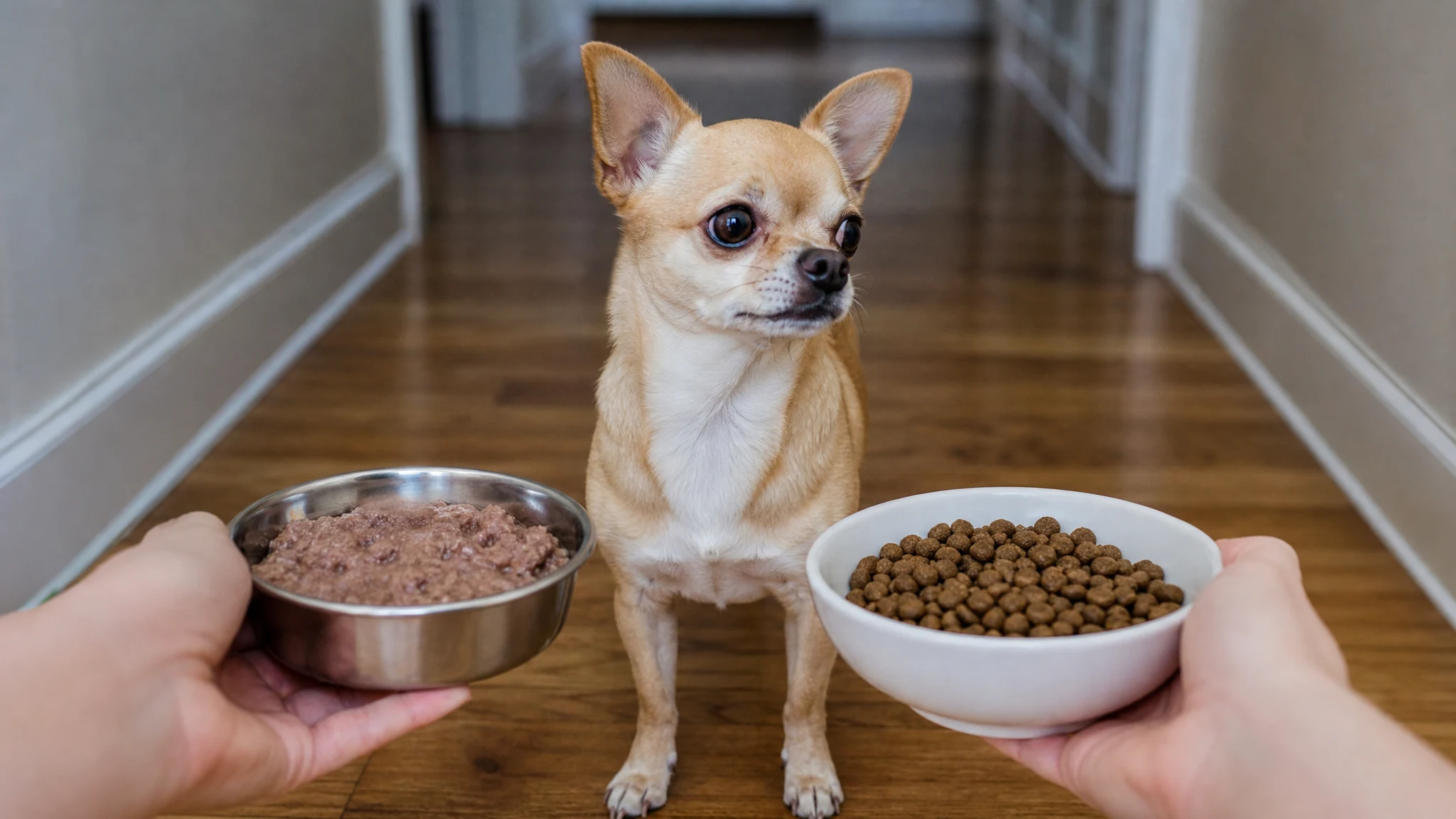
General nutrition information compiled from product labels and published sources, not veterinary advice. Your veterinarian is the right person to choose a diet for your dog, especially one with a health condition.
Many owners of tiny dogs ask how Health Extension dog food stacks up against the foods built for Chihuahuas. It is a fair question, and it needs a careful answer.
This guide compares label data only: the AAFCO statement, life stage, protein, fat, calories and first ingredients. We did not run feeding trials or taste tests. We read what the brands publish on their own pages.
One limit up front. We do not have verified label data for any Health Extension recipe, so we do not compare its numbers here. Instead, this guide shows what to check on any bag, including a Health Extension bag, and how the foods we do have label data for compare. For Health Extension, check the label and the brand's own website.
Why Chihuahua feeding is a label-reading job
Hill's Pet Nutrition lists adult Chihuahuas at about 2 to 6 pounds and says they seldom exceed six pounds. Wikipedia notes that pet Chihuahuas often go past the show standard, and some top 9 pounds.
At that size, a few extra kibbles are a large share of the day's food. Small differences in calories per cup matter more than they would for a bigger dog.
Toy-breed puppies are also described by Wikipedia as prone to low blood sugar, and patellar luxation is listed as a breed concern where weight control is relevant. Wikipedia is a secondary source, so treat these as topics to raise with your veterinarian. No food on this page prevents or treats either one. A veterinarian decides what is right for an individual dog.
What to look for: quality indicators on the label
1. A complete and balanced statement that fits the life stage
Look for the AAFCO statement. It should name a life stage: maintenance (adult), growth (puppy), or all life stages.
Growth and all-life-stages labels must also say whether they cover growth of large-size dogs (70 pounds or more as an adult) or exclude it, according to Whole Dog Journal's explanation of AAFCO labeling. A Chihuahua is far below 70 pounds, so either wording is fine for this breed.
2. How the statement was earned
Some labels say the food was formulated to meet AAFCO nutrient levels. Others say animal feeding tests using AAFCO procedures substantiate it. Hill's Science Diet uses the feeding-test wording on its Small & Mini pages. Royal Canin, VICTOR, Freshpet, Nom Nom and JustFoodForDogs use the formulated-to-meet wording on the pages we read. Both are recognized routes. They are different, and it helps to know which one you are looking at.
3. The first ingredients
Ingredients are listed by weight before cooking, so the first five tell you the most. Read them for what they are. "Chicken by-product meal" and "chicken" are different things, and a fresh meat first can be mostly water weight.
4. Calories per cup
This is the number that matters most for a small dog. It varies a lot between foods, which is why the cup measure on one bag cannot be copied to another.
5. Kibble size and texture
Royal Canin says its Chihuahua formulas use a small kibble designed for the breed's pointed muzzle and tiny jaw. Other brands in this guide do not state a kibble size on the pages we read. Check the brand before assuming a size.
Key features to compare
Here is the label data for the foods we can verify. Protein, fat and fiber are the guaranteed analysis figures unless noted. Hill's lists dry matter averages, not guaranteed minimums or maximums.
| Food | Form and stage | Protein / fat | Calories | First ingredients |
|---|---|---|---|---|
| Royal Canin Chihuahua Adult | Dry, adult, maintenance | 26% min / 14% min | 323 kcal per cup | Corn, chicken by-product meal, wheat gluten, oat groats, brewers rice |
| Royal Canin Chihuahua Puppy | Dry, growth | 28% min / 18% min | 350 kcal per cup | Chicken by-product meal, brewers rice, chicken fat, corn, wheat gluten |
| Royal Canin Chihuahua Adult Loaf In Sauce | Canned, adult, maintenance | 7% min / 4.1% min | 77 kcal per can | Water, chicken by-products, pork by-products, chicken, pork liver |
| Hill's Science Diet Adult Small & Mini | Dry, adult, maintenance | 25% / 15.3% (dry matter) | 357 kcal per cup | Chicken, brown rice, whole grain wheat, whole grain corn, brewers rice |
| Hill's Science Diet Puppy Small & Mini | Dry, growth | 28.9% / 19.7% (dry matter) | 418 kcal per cup | Chicken, whole grain oats, brown rice, chicken meal, chicken fat |
| VICTOR Hi-Pro Plus Small Breed Adult | Dry, all life stages except large-size growth | 30% min / 14% min | 360 kcal per cup | Beef, chicken meal, beef meal, brown rice, whole grain millet |
| VICTOR Hi-Pro Plus Small & Medium Breed Puppy | Dry, all life stages except large-size growth | 30% min / 18% min | 383 kcal per cup | Beef, chicken, beef meal, chicken meal, whole grain sorghum |
| Freshpet Small Dog Bite Size Chicken | Fresh, all life stages except large-size growth | 16% min / 12% min | 267 kcal per cup | Chicken, chicken liver, carrots, cranberries, eggs |
| Nom Nom Chicken Cuisine | Fresh, all life stages including large-size growth | 6.5% min / 4.5% min | 244 kcal per cup | Chicken, sweet potatoes, squash, spinach, dicalcium phosphate |
| JustFoodForDogs Pantry Fresh Chicken & Rice | Fresh, all life stages including large-size growth | 6.5% min / 2.5% min | About 31 kcal per ounce | Chicken breast, chicken thighs, chicken liver, long-grain white rice, kale |
How to read the table
Do not compare the wet and dry rows by percentage. Wet and fresh foods contain a lot of water, so their protein and fat percentages look small even when the food is nutritious. Calories per cup and the feeding guide are a fairer way to compare.
Royal Canin's adult formula has the lowest calories per cup of the dry foods here at 323. Hill's adult comes in at 357 and VICTOR's small breed adult at 360. A cup of one is not a cup of another, so never swap foods cup for cup.
Where Health Extension fits
Health Extension is a brand name many owners recognize, and it sells several dog recipes. We have no verified label data for any of them, so we cannot say how a given recipe compares in protein, fat, calories or ingredients.
If you are considering one, run it through the same checklist as the foods above:
- Find the AAFCO statement and confirm the life stage matches your dog.
- Read the first five ingredients.
- Find calories per cup and compare it with what your dog eats now.
- Look for a kibble size or texture description suited to a very small mouth.
- Read the brand's feeding guide as a starting point, not a rule.
The brand's own website is the right place for current numbers. Labels and formulas change, and we would rather send you to the source than guess.
Top picks by type of food
We do not list prices, because none are verified and they change often. Instead, these picks are grouped by the kind of food and what its label shows. They are not rankings, and we did not feed any of them.
Breed-specific dry food
Royal Canin makes Chihuahua-specific adult and puppy formulas. Its US product pages describe a small kibble for the breed's jaw, and give feeding tables by weight. The adult table runs from 2.2 to 7.7 pounds. For example, a 2.2 pound dog on low activity gets 1/4 cup (24 grams) per day. Its first ingredients lean on corn, by-product meal and wheat gluten, which some owners will want to weigh against their own preferences.
Small-breed dry food from a general brand
Hill's Science Diet Small & Mini and VICTOR Hi-Pro Plus Small Breed cover dogs of this size without being Chihuahua-specific. Hill's lists chicken first in both its adult and puppy recipes. VICTOR lists beef first and has the highest protein minimum in the table at 30%. VICTOR's feeding guide gives 1/2 cup daily for a 5 pound dog.
Hill's page says its puppy recipe is not recommended for adult dogs. Neither Hill's nor VICTOR states a numeric kibble size on the pages we read, so ask the brand.
Fresh and gently cooked food
Freshpet, Nom Nom and JustFoodForDogs sell fresh foods. Freshpet's small dog recipe is grain-free, at 267 kcal per cup, with a guide of 1/2 to 1 cup a day for a 5 to 10 pound dog. Nom Nom's guide gives 1 cup (218 grams) a day for a 10 pound dog on a fully Nom Nom diet.
JustFoodForDogs sends you to its feeding calculator instead of a fixed amount. These foods are not kibble, so they do not have a kibble size. Whether bite size works for a given Chihuahua is something to check with the brand.
Canned food
Royal Canin's Chihuahua Adult Loaf In Sauce lists 77 kcal per can. Its chart for a 2.2 pound dog on low activity calls for 1 1/4 cans (96 grams) when fed as the only food. Canned food can be a topper or a main meal, as the label guide allows.
Red flags to avoid
- No AAFCO statement. If a bag does not say it is complete and balanced for a life stage, it may be a treat or a supplement.
- A puppy food fed to an adult. Hill's says its puppy recipe is not recommended for adults. Match the life stage.
- Health promises. A food cannot prevent or treat hip problems, allergies, heart disease or bloat. Treat any such claim as marketing. Diets for medical conditions are something a veterinarian prescribes.
- Vague ingredient names. Be wary of a first ingredient that is not clearly named.
- Copying cup amounts between foods. Calories per cup range from 244 to 418 in the table above.
- Treating one number as the whole story. High protein on its own does not make a food right for your dog.
A note on the FDA and heart disease. The FDA Center for Veterinary Medicine has investigated a possible link between certain diets and canine dilated cardiomyopathy. Its latest update on the page is dated December 23, 2022, and it says reports alone are not enough to establish causation. If this worries you, ask your veterinarian about your dog's food. Check the FDA page for anything newer.
Where to buy
The safest route is the brand's own product page. It shows the current label, the AAFCO statement and the feeding guide. Compare the bag in your hands to that page, and check the lot and date on the package.
Buy from a seller you trust, and ask your veterinarian if you are unsure about a new food. We do not link to stores or run any shop, and we earn nothing from your choice.
Switching foods safely
Hill's and VICTOR both suggest moving to a new food gradually over about 7 to 10 days, and Nom Nom suggests about 7. Mix a little more of the new food each day. Watch your dog's appetite and stool, and call your veterinarian if something seems off. Adjust portions to keep your dog at a good weight, since the label guide is only a starting point.
For a fuller side-by-side of the foods we cover, see the best dog food for Chihuahuas compared label by label.
Bottom line
No label can tell you how your own dog will do. A good Chihuahua food has a clear AAFCO statement for the right life stage, named ingredients, a calorie count you can portion from, and a size and texture that suit a tiny mouth.
Use the checklist on any Health Extension bag the same way you would on Royal Canin, Hill's, VICTOR or a fresh brand. Then ask your veterinarian to confirm the choice for your dog.
Sources
- Royal Canin: Chihuahua Adult Dry Dog Food
- Royal Canin: Chihuahua Puppy Dry Dog Food
- Royal Canin: Chihuahua Adult Loaf In Sauce
- Hill's Science Diet: Adult Small & Mini
- Hill's Science Diet: Puppy Small & Mini
- Hill's Pet Nutrition: Chihuahua breed page
- VICTOR: Hi-Pro Plus Small Breed Adult
- VICTOR: Hi-Pro Plus Small & Medium Breed Puppy
- Freshpet: Small Dog Bite Size Chicken Recipe
- Nom Nom: Chicken Cuisine
- JustFoodForDogs: Pantry Fresh Chicken & Rice
- FDA Center for Veterinary Medicine: Investigation into diets and canine dilated cardiomyopathy
- Whole Dog Journal: In the Fine Print, Nutritional Adequacy Statements
- Wikipedia: Chihuahua (dog breed)