Dog Probiotics for Gut Health: What the Evidence Says for Chihuahuas
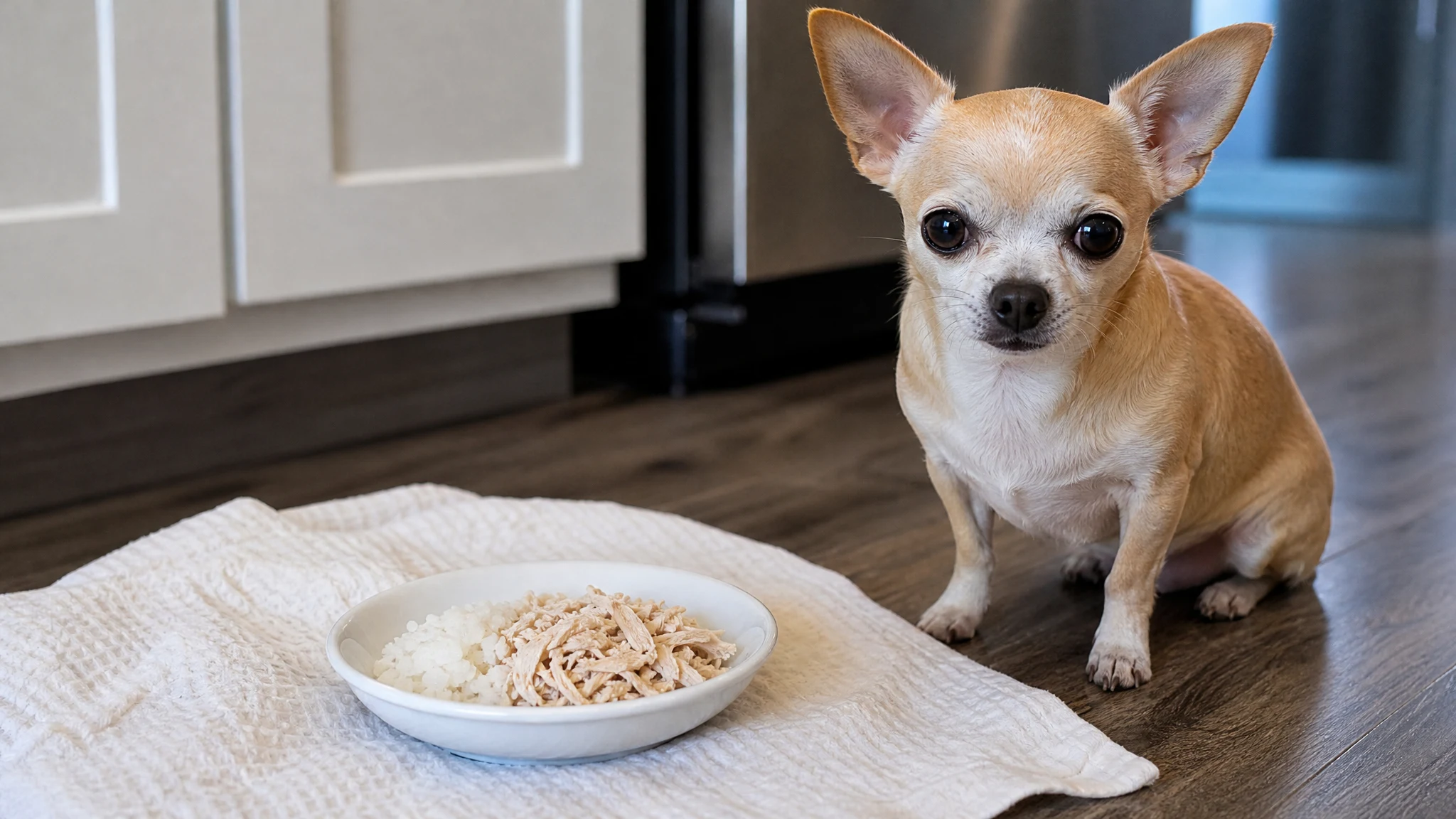
General nutrition information compiled from product labels and published sources, not veterinary advice. Your veterinarian is the right person to choose a diet for your dog, especially one with a health condition.
Probiotic chews, powders and sprinkles are easy to find. Clear proof that they help a tiny dog is much harder to find. This guide shows you how to look at dog probiotics for gut health with a careful eye, and how to bring one into a Chihuahua's routine without making things worse.
It is a process, not a recipe. You will gather the right information, check the label, talk with your veterinarian, and change one thing at a time.
One honest note up front. We compared label data and published breed information. We did not run feeding trials or taste tests, and we did not try any probiotic product ourselves.
What the evidence can and cannot tell you
Probiotics are live microorganisms added to food or given as a supplement. Marketing often says they "support digestion" or "balance the gut." Those phrases sound scientific but are not the same as proof for your individual dog.
Here is what we can say with confidence, and where the limits are:
- Breed-specific proof is thin. The sources we relied on for this page do not report a Chihuahua-specific probiotic study. If a brand says its product was tested in Chihuahuas, ask the brand to show you the study.
- Strains matter. "Probiotic" is a broad word. A benefit seen with one strain does not carry over to another.
- No food or supplement prevents, treats or cures a disease. If your dog has ongoing diarrhea, vomiting or weight loss, that is a question for a veterinarian, not a supplement shelf.
So the goal here is not to promise a result. It is to make a well-informed, low-risk decision with your vet.
Why a Chihuahua needs a more careful approach
Chihuahuas are small. Hill's Pet Nutrition lists adult weight at about 2 to 6 pounds, and says they seldom exceed six pounds. Wikipedia notes that pet Chihuahuas often run heavier than the show standard.
At that size, a stomach upset matters more. A little diarrhea or a skipped meal is a bigger event for a 4 pound dog than for a 40 pound dog.
Wikipedia also lists hypoglycemia (low blood sugar) as a concern in toy-breed puppies. That is a secondary source, so treat it as a reason to ask your vet, not as a diagnosis guide. If a tiny puppy has diarrhea, will not eat, or seems weak, call a veterinarian promptly rather than trying a supplement first.
Wikipedia also mentions patellar luxation, where weight control is relevant. Gut-friendly choices should never come with extra calories you did not plan for. For the bigger picture on diet, see our guide to the diet factors that matter for Chihuahuas.
Materials you need
- Your dog's current food bag or can, with the full label.
- The probiotic product label you are considering (photo or the package itself).
- A kitchen scale or the measuring cup you already use, so portions stay consistent.
- A notebook or phone notes to log stools, appetite and energy.
- Your veterinarian's contact details.
Step-by-step: how to approach probiotics for your Chihuahua
Step 1: Write down why you are considering a probiotic
Be specific. "Loose stools twice this week" is useful. "General gut health" is vague.
Noting the reason helps your vet decide whether a probiotic is even the right tool. Sometimes the answer is a food change, a parasite check or a medical exam instead.
Step 2: Rule out the basics with your veterinarian
Before adding anything, ask your vet to look at the whole picture. Stomach upset in a toy dog can come from sudden food changes, table scraps, stress, parasites or illness.
Ask directly: "Is a probiotic reasonable for my dog, and is there a specific type you would trust?" A veterinarian decides what is right for an individual dog. Prescription diets, if any are needed, come only from a veterinarian.
Step 3: Read your dog's current food label first
Some foods already include added ingredients aimed at digestion. Others do not. Check the ingredient list and the nutritional adequacy statement before you add a second product on top.
The adequacy statement tells you whether the food meets AAFCO nutrient profiles. For example, the Royal Canin Chihuahua Adult dry food page states that it is formulated to meet AAFCO nutrient levels for maintenance. The Royal Canin Chihuahua Puppy page states a growth profile. A Chihuahua is far below the 70 pound large-size threshold, so wording such as "except for growth of large size dogs" is not a concern for this breed, according to Whole Dog Journal's explanation of AAFCO statements.
If you are unsure whether your dog's food suits their life stage, that is worth settling before any supplement.
Step 4: Read the probiotic label like a skeptic
Look for these items, and note anything that is missing:
- Species and strain names. A label that only says "probiotic blend" tells you very little.
- A dog-specific statement. Products made for people are not designed for dogs.
- Added ingredients. Flavorings, sweeteners and extra fillers can matter for a tiny dog. Avoid anything your vet has told you to skip.
- Manufacturer contact information. A real company can answer questions about strains and testing.
- Claims that sound like medicine. Wording that promises to fix or cure a condition is a red flag.
We are not naming probiotic brands here. The sources we relied on give no label data for probiotic products, so check each brand's own page and ask the brand for anything you cannot find.
Step 5: Follow your vet's amount, not a guess
Do not scale an amount down from a large-dog label. Tiny dogs are easy to overdo. Use the amount your veterinarian recommends and the directions printed by the product's maker. We do not give amounts here, because the right one depends on the product and the dog.
Step 6: Introduce one change at a time
This step is the one most owners skip. If you start a probiotic and change the food in the same week, you will never know which one caused a reaction.
For food changes, brands give a useful pattern. Hill's Science Diet suggests transitioning over 7 days. VICTOR suggests 7 to 10 days. A slow approach is a sensible habit for any new addition. Start the probiotic only once your dog's stools and appetite are steady on the current food.
Step 7: Keep calories and treats under control
Some probiotic products come as soft chews or treats, and those add calories. In a dog of a few pounds, small extras add up quickly.
Feeding guides on labels are starting points, not rules. Hill's, for example, tells owners to adjust portions to maintain an optimal weight. If a chew is added, your vet can help you trim the meal slightly so the daily total stays the same.
Step 8: Track what happens for a few weeks
Log these daily in your notebook:
- Stool quality and frequency
- Appetite and eating speed
- Energy and mood
- Gas, vomiting or any new itching
Bring the log to your next vet visit. It is far more helpful than saying "I think it helped."
Step 9: Decide with your vet whether to continue
If nothing changes, that is a real answer. A product that makes no visible difference may not be worth the cost or the extra step. If your dog does worse, stop the product and call your veterinarian.
Expected results
Results vary, and nobody can promise one. Some owners notice firmer stools or steadier digestion after adding a probiotic. Others notice no change at all. Because a dog's gut also responds to food, stress and many other things, it is hard to credit any single product.
It is reasonable to hope for modest, gradual changes. It is not reasonable to expect a probiotic to prevent, treat or cure a medical condition. Persistent digestive trouble needs a veterinary exam.
Tips and common mistakes to avoid
Tips
- Take a photo of every label you consider so you can compare them side by side.
- Keep the stool log even when things look fine. Normal days give you a baseline.
- Choose small, consistent portions of any new item.
- Ask the brand how a product is tested. A brand with good data will usually share it.
Common mistakes
- Treating a probiotic as a fix for illness. Ongoing diarrhea, vomiting, blood in stool or lethargy need a veterinarian.
- Changing several things at once. You lose the ability to tell what is working.
- Using a human product. Ingredients that are fine for people can be wrong for a toy dog.
- Ignoring the calories. Chews and toppers add up fast at 4 pounds.
- Believing "grain free" means gut friendly. The FDA has investigated a possible link between certain diets and canine dilated cardiomyopathy (DCM). Its latest update on that page is dated December 23, 2022, and it says reports alone are not enough to establish causation. Ask your vet, and check the FDA page for any newer information.
- Skipping the vet for puppies. Very small puppies can get into trouble quickly when they stop eating.
A note on fresh and wet foods
Some owners reach for fresh or wet foods when a dog's stomach seems touchy. The label data on those foods shows how different they are. Freshpet's Small Dog Bite Size Chicken Recipe lists 267 kcal per cup. Royal Canin's Chihuahua Adult Loaf In Sauce lists 77 kcal ME per can. The Royal Canin Chihuahua Adult dry food lists 323 kcal ME per cup.
Those numbers are not interchangeable. A cup of one food is not a cup of another, so swapping foods without adjusting portions can change your dog's calorie intake a lot. These are label facts only, and none of these foods is claimed here to help or fix a gut problem.
When to call the veterinarian
- Diarrhea or vomiting that lasts more than a short time, or that comes with weakness
- A puppy that will not eat
- Blood in the stool
- Any sudden change in behavior or energy
- Questions about whether a probiotic fits with a medication your dog takes
The bottom line
Dog probiotics for gut health may suit some Chihuahuas, but the evidence for any one product in this breed is limited, and we cannot point to a Chihuahua-specific study. The safest path is slow and simple: check the label, involve your vet, add one thing at a time, and watch your dog.
Sources
- Hill's Pet Nutrition: Chihuahua breed page
- Wikipedia: Chihuahua (dog breed)
- FDA Center for Veterinary Medicine: investigation of diets and canine dilated cardiomyopathy
- Whole Dog Journal: nutritional adequacy statements
- Royal Canin: Chihuahua Adult dry dog food
- Royal Canin: Chihuahua Adult loaf in sauce
- Hill's Science Diet: Adult Small & Mini dry food
- VICTOR: Hi-Pro Plus Small Breed Adult
- Freshpet: Small Dog Bite Size Chicken Recipe