Chihuahua Nutrition 101: The Basics Every Owner Should Know
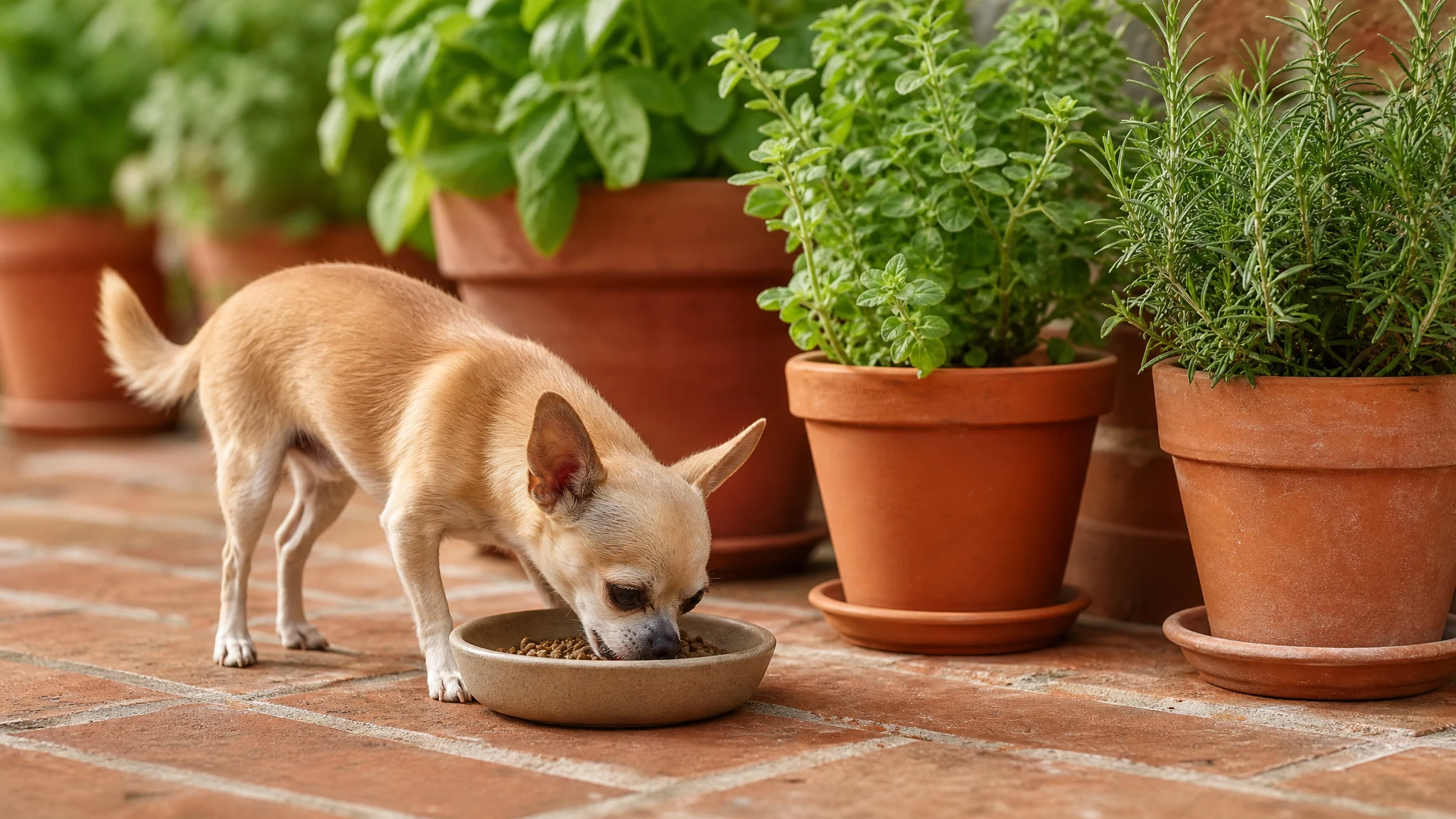
General nutrition information compiled from product labels and published sources, not veterinary advice. Your veterinarian is the right person to choose a diet for your dog, especially one with a health condition.
Feeding a Chihuahua looks simple. The bowl is tiny and the dog is tiny. But small bodies leave little room for error, and pet food marketing is loud. This guide walks through the basics of dog nutrition for a Chihuahua as a series of steps you can follow with a food bag in your hand.
It is a label-reading guide, not medical advice. A veterinarian decides what is right for an individual dog, especially a puppy, a senior or a dog with a health condition.
How we compared foods
We compared label data published on each brand's own product page: the AAFCO statement, the first ingredients, the guaranteed analysis and the calories. We did not run feeding trials or taste tests, and we are not ranking foods. The examples below show what to look for, not what to buy.
What you need before you start
- The bag or can of the food you feed now, or the brand page for any food you are considering.
- A kitchen scale or a proper measuring cup. Eyeballed scoops add up fast in a dog this small.
- Your dog's current weight, written down with the date.
- A notebook or phone note for meals, treats and stool quality.
- Your veterinarian's contact details, for the questions this article cannot answer.
Step 1: Know the size you are feeding for
Hill's Pet Nutrition lists the Chihuahua at roughly 2 to 6 pounds and says the breed seldom exceeds six pounds. Wikipedia notes that the show standard maximum is 2.7 kg (5.9 lb), and that pet Chihuahuas sometimes exceed 4.5 kg (9.9 lb). So a pet dog heavier than the show standard is not unusual, but it is worth asking your veterinarian whether your dog's weight is healthy for its frame.
Why this matters: a toy dog can gain a noticeable share of its body weight from a few extra treats. Weigh your dog every month or so and keep the numbers.
For a deeper look at the factors that shape a Chihuahua's diet, see Chihuahua nutrition: the diet factors that matter.
Step 2: Match the food to the life stage
The first thing to find on any label is the nutritional adequacy statement. It says what life stage the food is formulated for. Whole Dog Journal explains that growth and all-life-stages foods must say either "including growth of large-size dogs (70 pounds or more as an adult)" or "except for growth of large-size dogs."
A Chihuahua is far below 70 pounds, so "except for growth of large-size dogs" is not a concern for this breed. It simply tells you the food was not built for giant-breed puppies.
Examples of how the statements read on brand pages:
- Royal Canin's Chihuahua Adult dry food says it is formulated to meet AAFCO nutrient levels for maintenance. The brand describes it for purebred Chihuahuas 8 months and older.
- Royal Canin's Chihuahua Puppy dry food is formulated for growth, and its feeding table runs from 2 to 9 months. The brand says to move to its adult food after 8 months.
- VICTOR's Hi-Pro Plus Small Breed Adult is labeled for all life stages, except growth of large size dogs.
- Hill's Science Diet Puppy Small & Mini states that AAFCO feeding tests support it for growing puppies. Hill's says it is not recommended for adult dogs.
The takeaway: puppies eat a growth or all-life-stages food, and adults eat a maintenance or all-life-stages food. Check the statement before anything else.
Step 3: Choose a food form that suits your household
Dry, canned and fresh foods can all carry a complete-and-balanced statement. The differences are practical.
- Dry: Royal Canin describes its Chihuahua formulas as small kibble designed for the breed's pointed muzzle and tiny jaw. Kibble size is worth checking, and several brands do not state it on their pages. If it is missing, check with the brand.
- Canned: Royal Canin's Chihuahua Adult Loaf In Sauce lists 77 kcal per can, with water as the first ingredient.
- Fresh: Freshpet's Small Dog Bite Size Chicken Recipe lists 267 kcal per cup, and Nom Nom's Chicken Cuisine lists 244 kcal per cup. Both are fresh foods with very different calorie density from kibble.
None of these forms is automatically better. Pick one you can measure accurately, store properly and afford to keep feeding consistently.
Step 4: Read the ingredients and guaranteed analysis
Ingredients are listed by weight before cooking, so the first five tell you the most about the recipe. Here is how a few labels differ:
| Food (brand page) | First ingredients listed | Calories listed |
|---|---|---|
| Royal Canin Chihuahua Adult (dry) | Corn, chicken by-product meal, wheat gluten, oat groats, brewers rice | 323 kcal per cup |
| Hill's Science Diet Adult Small & Mini (dry) | Chicken, brown rice, whole grain wheat, whole grain corn, brewers rice | 357 kcal per cup |
| VICTOR Hi-Pro Plus Small Breed Adult (dry) | Beef, chicken meal, beef meal, brown rice, whole grain millet | 360 kcal per cup |
| Freshpet Small Dog Bite Size Chicken (fresh) | Chicken, chicken liver, carrots, cranberries, eggs | 267 kcal per cup |
Two cautions when reading these numbers. First, a cup of one food is not a cup of another, so compare calories, not volume. Second, label values are not always the same kind of number. VICTOR lists a minimum of 30% crude protein. Hill's lists its adult small-breed protein of 25% on a dry matter basis, which is not a guaranteed minimum. Wet and fresh foods carry lower percentages simply because of water. Royal Canin's canned loaf lists 7% minimum protein, which is not comparable to a dry food's figure.
Ingredient names do not tell you whether a food suits your dog. A veterinarian can help you weigh that, particularly if your dog has had skin, stomach or other health concerns.
Step 5: Start from the label's feeding guide, then adjust
Treat the label's feeding guide as a starting point, not a prescription. Examples from the brands' own pages:
- Royal Canin lists a dry feeding table by weight (2.2 lb to 7.7 lb) and activity level. Its example is that a 2.2 lb dog with low activity gets 1/4 cup (24 g).
- VICTOR's example is 1/2 cup daily for a 5 lb dog and 1 cup for a 10 lb dog.
- Freshpet lists 1/2 to 1 cup for a 5 to 10 lb dog, in one or two meals.
Notice how different these are. That is because the foods have different calorie densities. Always use the guide printed for the food you are actually feeding. Hill's advises adjusting portions to maintain optimal weight and checking with a veterinarian if you are unsure.
Then adjust based on your dog's body condition and your veterinarian's advice. Count treats as part of the day's food.
Step 6: Be extra careful with puppies
Wikipedia notes that hypoglycemia (low blood sugar) is a concern in toy-breed puppies. We could not find a veterinary primary source to cite for specifics, so this is a topic to raise with your veterinarian before or soon after you bring a puppy home. Ask how often to feed, what to watch for and when a change in appetite or energy needs a call or a visit.
Use a puppy or all-life-stages food, follow the age and target-weight table on the label, and ask your veterinarian when to move to an adult food. Royal Canin's page, for example, gives 8 months for its own formulas, but other brands and individual dogs can differ.
Step 7: Switch foods slowly
When you change foods, mix the new food into the old over several days. Hill's suggests a 7-day transition, and VICTOR suggests 7 to 10 days. A simple pattern is mostly old food with a little new at first, then gradually reversing the proportions. If your dog has loose stool, vomiting or loses interest in meals, slow down and call your veterinarian.
Step 8: Watch weight and keep notes
Wikipedia lists patellar luxation, a kneecap problem, among the orthopedic concerns in the breed, and weight control is relevant to it. This does not mean any food prevents or treats the condition. It means that keeping a small dog lean is a reasonable goal to discuss with your veterinarian.
Each month, record weight, how the ribs feel under a light touch, stool quality and appetite. Bring the notes to checkups.
Tips that make this easier
- Measure every meal. A few extra kibbles matter more in a 5 lb dog than in a 50 lb one.
- Keep treats small and count them toward the daily total.
- Store dry food sealed and away from heat, and follow the brand's guidance on freshness.
- Choose one change at a time, so you can tell what caused any reaction.
- When a brand page does not say something, such as kibble size or grain-free status, ask the brand directly rather than guessing.
Common mistakes to avoid
- Feeding a puppy food to an adult, or the reverse. Hill's, for one, says its puppy formula is not recommended for adults.
- Comparing foods by cup instead of calories. The table above shows why that misleads.
- Trusting front-of-bag claims over the back-of-bag statement. The adequacy statement and guaranteed analysis are where the facts are.
- Switching all at once. A fast change is a common cause of stomach upset.
- Using a food to try to manage a health condition on your own. Prescription diets are something only a veterinarian prescribes.
- Making a recipe at home without guidance. A homemade diet can miss nutrients. Talk to your veterinarian before trying one.
A note on grain-free and DCM
You may have seen concern about certain diets and dilated cardiomyopathy (DCM). The FDA Center for Veterinary Medicine states that reports alone are not enough to establish causation. Its latest update on the investigation page is dated December 23, 2022, and it does not plan further public updates until there is meaningful new scientific information. Check the FDA page for current information, and ask your veterinarian whether it applies to your dog's diet.
What to expect
Results vary by dog, and no food makes promises about health. If you choose an appropriate life-stage food, measure portions and transition gradually, you may notice steady energy, regular stools and a stable weight over the following weeks. Those are signs to share with your veterinarian, not proof that a diet is right. If your dog gains or loses weight, refuses meals, or has ongoing digestive trouble, contact your veterinarian rather than changing foods repeatedly.
Quick checklist
- Write down your dog's current weight.
- Confirm the food's life-stage statement.
- Compare calories per cup or per can, not just volume.
- Use the feeding guide as a starting point and count treats.
- Transition over at least 7 days.
- Weigh monthly and review with your veterinarian.
Sources
- Hill's Pet Nutrition: Chihuahua breed page
- FDA Center for Veterinary Medicine: investigation into diets and canine dilated cardiomyopathy
- Whole Dog Journal: In the fine print, nutritional adequacy statements
- Wikipedia: Chihuahua (dog breed), a secondary source
- Royal Canin: Chihuahua Adult dry dog food
- Royal Canin: Chihuahua Puppy dry dog food
- Royal Canin: Chihuahua Adult loaf in sauce
- Hill's Science Diet: Puppy Small & Mini
- Hill's Science Diet: Adult Small & Mini
- VICTOR: Hi-Pro Plus Small Breed Adult
- Freshpet: Small Dog Bite Size Chicken Recipe
- Nom Nom: Chicken Cuisine